The Red Sea, a crucial maritime corridor connecting the Indian Ocean to the Mediterranean Sea via the Suez Canal, has recently witnessed a surge in conflict-related attacks targeting international shipping. These incidents pose significant risks to global trade and maritime security, with implications for the safety of vessels, their crews, and the environment.
Recent Trends and Incidents
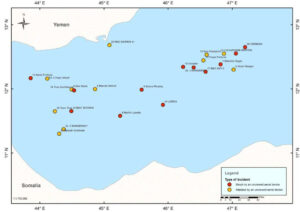
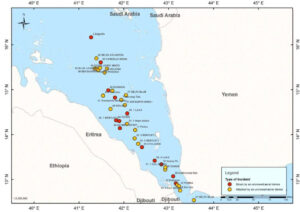
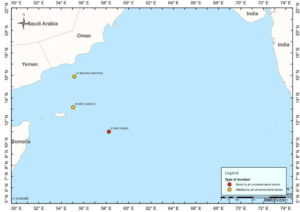
According to the latest IMO report (as of 25 November 2024), 69 incidents have been confirmed since November 2023, involving various types of vessels transiting the Red Sea and Gulf of Aden. Notable examples include:
- 1 October 2024: The Panama-flagged crude oil tanker Cordelia Moon was struck by an uncrewed surface device in the southern Red Sea, puncturing the Number 6 port ballast tank. Fortunately, the crew was unharmed, and the vessel resumed its voyage.
- 10 October 2024: The Liberian-flagged chemical/products tanker Olympic Spirit was attacked by an uncrewed aerial device but remained seaworthy with no injuries reported.
- 28 October 2024: The Liberian bulk carrier Motaro was targeted by three uncrewed aerial devices, which landed within 150–250 meters of the vessel. No injuries or damage were reported.
Types of Vessels Targeted
A variety of vessels have been affected, with container ships and tankers representing the highest proportion of targets:
- Container Ships: 30%
- Tankers: 29%
- Bulk Carriers: 29%
- General Cargo Ships: 10%
- Ro-Ro Cargo Vessels: 2%.
Nature of Attacks
The incidents primarily involve:
- Uncrewed Aerial Devices (UAVs): Many attacks have utilized drones to target vessels, often causing structural damage.
- Uncrewed Surface Devices (USVs): These devices are deployed in the water to attack ships, as seen in the Cordelia Moon incident.
- Missiles and Other Conventional Weapons: In some cases, ships have faced attacks from shore-based weapons.
Distribution of Incidents
The attacks have been concentrated in the southern Red Sea and Gulf of Aden, reflecting the region’s proximity to conflict zones. The monthly distribution of incidents peaked in June 2024, with 16 recorded cases, underscoring the volatility of the area during this period.
International Response
To address the growing risks, the IMO and UN have taken the following measures:
- Monitoring and Reporting: Regular updates and incident reports are submitted to the UN Security Council under resolutions S/RES/2722(2024) and S/RES/2739(2024).
- Enhanced Security Measures: International naval coalitions patrol high-risk areas, providing escorts for vulnerable vessels.
- Guidance for Mariners: The IMO advises shipping companies to adopt Best Management Practices (BMP) to enhance onboard security and maintain contact with naval authorities.
Recommendations for Vessel Operators
Shipowners and operators navigating the Red Sea should take the following precautions:
- Route Optimization: Avoid high-risk areas when feasible and adhere to IMO guidance.
- Enhanced Vigilance: Maintain a robust watch for suspicious activities and unauthorized approaches.
- Onboard Security Measures: Equip vessels with anti-drone systems and ensure the crew is trained to respond to potential threats.
- Communication with Authorities: Stay in close contact with regional maritime security centers and report incidents immediately.
Conclusion
The increasing frequency of conflict-related attacks in the Red Sea highlights the urgent need for collaborative efforts to enhance maritime security. While international initiatives are underway, it remains critical for shipowners, operators, and mariners to remain vigilant and adopt proactive measures to mitigate risks. The safety of global trade and the well-being of seafarers depend on collective action in this vital region.
*Data taken from IMO website and reports https://www.imo.org/en/MediaCentre/HotTopics/Pages/Red-Sea.aspx