
Winds at sea play a crucial role in maritime navigation and operations. They influence everything from ship speeds and routes to the safety of vessels and the effectiveness of marine operations. Understanding the types of winds that prevail in different regions and the best times to anticipate them can be pivotal for a smooth and safe voyage.
Here’s a guide to the most common winds encountered at sea, their characteristics, and how they affect navigation.
1. Trade Winds (Tropical Winds)
Region: Equatorial regions (between 30°N and 30°S)
Direction: Generally from the northeast in the Northern Hemisphere and from the southeast in the Southern Hemisphere.
Characteristics:
Trade winds are consistent, steady winds that blow from the subtropical high-pressure areas toward the equator. These winds are essential for global shipping routes, especially for sailing ships in the past. Modern vessels still benefit from their predictable nature, although they are not as crucial to contemporary shipping methods.
Impact on Shipping:
- Helps ships traveling eastward in the tropics by providing steady wind power.
- Impacts the speed and routing of vessels along these latitudes.
2. Westerlies (Prevailing Westerlies)
Region: Between 30° and 60° latitudes in both hemispheres
Direction: Winds typically blow from the southwest in the Northern Hemisphere and from the northwest in the Southern Hemisphere.
Characteristics:
The westerlies are found in the temperate regions and are driven by the pressure differences between the subtropical highs and the subpolar lows. They are generally stronger and more unpredictable than trade winds and can change rapidly.
Impact on Shipping:
- Important for vessels traveling from west to east, as they help in pushing ships along the route.
- Their unpredictability can pose a challenge in navigation, especially in storm-prone regions like the North Atlantic.
3. Polar Easterlies
Region: Near the poles, around 60° to 90° latitudes
Direction: Blowing from east to west.
Characteristics:
At the polar regions, cold air descends and flows towards the equator, creating easterly winds that blow from the east to the west. These winds are typically cold, dry, and strong, especially near the poles.
Impact on Shipping:
- Limited impact on most shipping routes, but can be a significant factor for vessels navigating near the polar regions or conducting Arctic voyages.
- Contributes to rough sea conditions in these areas.
4. Monsoon Winds
Region: Southeast Asia, South Asia, parts of Africa
Direction: The direction reverses seasonally: From the southwest during the summer and from the northeast during the winter.
Characteristics:
Monsoon winds are seasonal and extremely powerful, causing heavy rain and sometimes storms. The winds change direction depending on the season, which significantly impacts the climate and the maritime environment.
Impact on Shipping:
- Winter monsoons are more predictable and less intense, providing calmer seas for shipping.
- Summer monsoons can create dangerous conditions, including strong winds and heavy rain.
- Vessels operating in or near monsoon regions need to plan for weather changes that could delay or alter their course.
5. Local Winds
Regions: Coastal areas, islands, and certain geographical features like mountain ranges and valleys
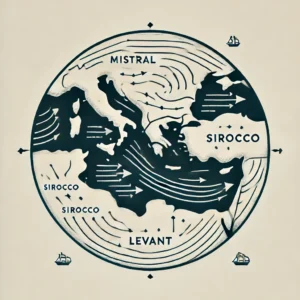
Examples: Mistral (France), Föhn (Switzerland), Sirocco (Mediterranean), and more.
Characteristics:
Local winds occur due to specific geographic features. For instance, winds can be funneled through valleys, or mountain ranges can affect wind patterns, creating strong gusts or sudden shifts in direction. These winds are highly variable in both strength and direction.
Impact on Shipping:
- Local winds can create hazards in coastal or confined waters.
- They can change abruptly, so vessels need to be ready to adjust their navigation based on the conditions.
- Such winds can affect port operations, docking, and unloading processes.
6. Storm Winds (Tropical Cyclones, Hurricanes, Typhoons)
Region: Tropical and subtropical regions, particularly in the Atlantic and Pacific Oceans
Direction: Depends on hemisphere (counterclockwise in the Northern Hemisphere and clockwise in the Southern Hemisphere).
Characteristics:
Storm winds occur during cyclonic systems like hurricanes and typhoons. These storms are characterized by extremely strong winds and are accompanied by heavy rain, high waves, and potentially dangerous sea conditions. They usually form over warm ocean waters and can last for days.
Impact on Shipping:
- Storms create dangerous, unpredictable conditions that can threaten the safety of vessels.
- Ships must navigate away from storm zones or endure significant delays.
- Cyclonic winds can cause damage to ships and equipment.
Key Considerations for Mariners:
When navigating the world’s oceans, mariners must consider several factors influenced by winds, including:
- Wind Forecasting: Always check weather reports and forecasts for wind conditions, especially in areas with known wind patterns such as the Trade Winds or Monsoons.
- Wind Strength: In certain regions, wind strength can vary seasonally. Storms, cyclones, and even local winds can suddenly alter conditions at sea.
- Route Planning: Adjust sailing routes based on prevailing wind directions. Using wind patterns effectively can save time and fuel.
- Safety Measures: Prepare for possible wind-driven weather events by ensuring that the vessel’s safety equipment is in working order and that there are contingency plans for adverse conditions.
Conclusion:
Winds at sea are a powerful force that significantly influences maritime navigation. Understanding the different types of winds, their seasonal behaviors, and their impact on navigation and vessel operations is crucial for safe and efficient shipping. Mariners must always be prepared for the unexpected, as winds can change rapidly, and their effects can be far-reaching. By staying informed and planning ahead, shipping companies and mariners can ensure smoother voyages even in the face of challenging wind conditions.
test test
a test
test test 3 3
test 4